
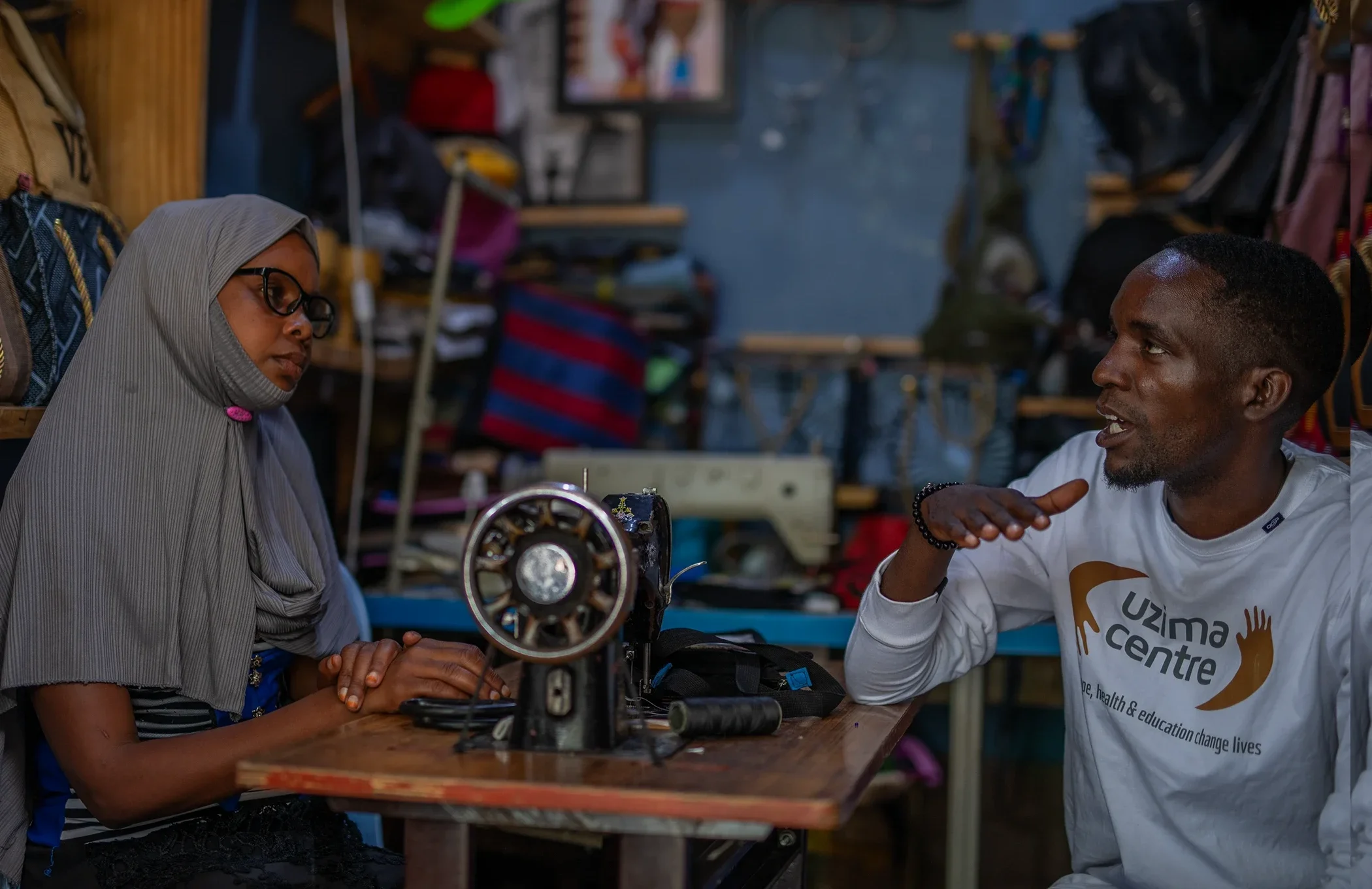
By the time most young women are finishing university, Esther Sigore had already lived through a lifetime of hardship. At just 24 years old, she had completed Standard Seven, failed her examinations, been pushed into early marriage, given birth to three children, and survived a divorce. She had once learned to sew — a skill she loved — but without a sewing machine, that dream sat out of reach.
To keep her children fed, Esther found work helping Mama Ntilie, a local street food vendor in Mwanza, Tanzania. She sold food on the street each day, earning a small income that covered the basics but never quite enough. There was always a bill she could not pay, a school need she could not meet, a gap she could not close.
That was life before Uzima.
A Programme That Saw Her Potential
Uzima Organization works with vulnerable families across Mwanza through its INUKA Resilience Model — a structured programme that strengthens livelihoods, improves health, and keeps children in school. When Esther joined the Learn and Earn Programme, nobody handed her a solution. Instead, they gave her something more lasting: skills, confidence, and a community.
Through the programme, Esther discovered and developed her creativity in traditional African cultural crafts. She learned to make African-style bags and handcrafted items that carry both beauty and cultural identity. Alongside the craft training, she received foundational lessons in small-scale business management — how to price her work, track her income, and grow what she was building.
For a woman who had spent years selling someone else’s food, learning to create and sell something entirely her own was more than an income stream. It was a reclaiming of identity.
What Change Looks Like
Today, Esther Sigore earns approximately TZS 50,000 per month from selling her handmade crafts. It may sound modest, but for a single mother of three in Mwanza, it is the difference between dependence and agency. She supports her children. She makes her own decisions. She runs her own small business.
More than the money, Esther now carries herself differently. She is not surviving around the edges of someone else’s livelihood. She is building her own.
Why Stories Like Esther’s Need Investment
Esther’s transformation did not happen by accident. It happened because Uzima Organisation invested in her — in facilitators who ran the programme, in training materials, in the time and structure that allowed her to learn without pressure and grow at her own pace.
There are hundreds of women like Esther in Mwanza. Women who are capable, creative, and determined — but who face barriers that a single well-designed programme can help them overcome. Uzima has proven the model works. What is needed now is the funding to reach more of them.
When you support Uzima Organization, you are not funding a statistic. You are funding the next Esther — a mother who will earn her own income, raise her children with stability, and become a quiet example of resilience in her community.
0 Comments